What are Sudoku techniques?
Sudoku techniques are logic patterns that prove where a number must go, or where it cannot go. They use only one rule: every row, column and 3 × 3 box holds each number once. With them you never have to guess.
Which should you learn first? Start with naked singles and hidden singles. Together they solve most easy and medium puzzles. Then add naked pairs and pointing pairs for harder ones, and hidden pairs, box/line reduction and naked triples when the notes get crowded. The X-Wing is your first advanced pattern for the toughest boards. After it come hidden triples, the Swordfish and Skyscraper, the Y-Wing and XYZ-Wing, and the Unique Rectangle. The last six take you further: naked quads, the 2-String Kite, the Empty Rectangle, the W-Wing, Simple Coloring and the Finned X-Wing.
In Marble Sudoku the numbers 1 to 9 are nine marble colors. Every technique works exactly the same way.
How to learn them
- 1Singles place numbers directly.
- 2Pairs remove candidates so new singles appear.
- 3Repeat: after every move, look for singles again.
THE LEARNING PATH
Learn these twenty techniques in order
Each board below plays the move it teaches. Open a lesson to solve it yourself, then practice on new puzzles.
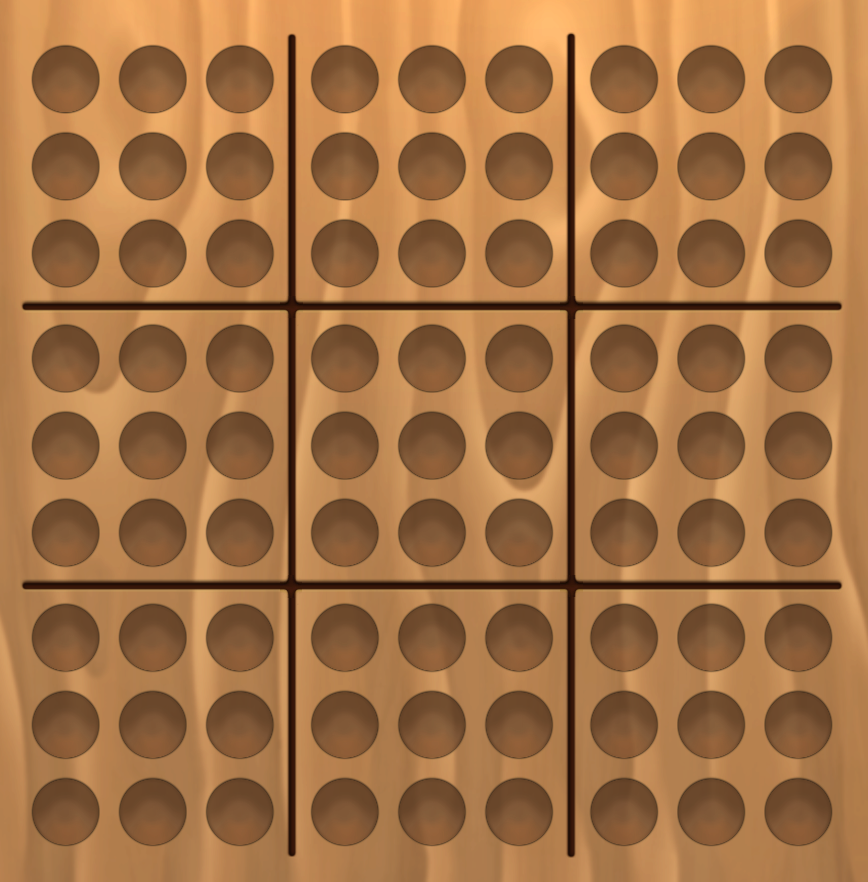
 This is the real board from Marble Sudoku. The nine marble colors stand for the numbers 1 to 9.
-
Naked singles
One empty cell, one possible number.
Check the cell’s row, column and 3 × 3 box. If eight different numbers are already there, the ninth goes in the cell.
Animated example: Watch the row, column and box light up until only Navy is left.
Start lesson -
Hidden singles
One number, only one place it can go.
Pick a number and a row, column or box that still needs it. If every cell but one is blocked, that cell gets the number.
Animated example: Watch two lines block three of the four holes, so Green has one spot left.
Start lesson -
Naked pairs
Two cells, the same two candidates.
When two cells in one group can only hold the same two numbers, those numbers belong to them. Remove both from every other cell in the group.
Animated example: Watch Yellow and Purple lock two holes, which leaves one color for the last hole.
Start lesson -
Pointing pairs
A box that points along a line.
If a number can only go in one row or column inside a box, it must go on that line in that box. Remove it from the rest of the line.
Animated example: Watch Navy’s two spots in a box clear the rest of the row, so Navy has one place left in the next box.
Start lesson -
Hidden pairs
Two numbers hiding in the same two cells.
When two numbers fit nowhere else in a group, they are locked into two cells — even if those cells show extra candidates. Strip everything else from them.
Animated example: Watch Yellow and Navy lock two holes, their extra notes vanish, and Red falls into place in the box.
Start lesson -
Box/line reduction
A line that claims a whole box.
If every spot a number has in a row or column falls inside one box, the number must sit in that box on that line. Remove it from the rest of the box.
Animated example: Watch Sky’s two spots in a row claim the box, clearing four holes and leaving Teal a single spot.
Start lesson -
Naked triples
Three cells, three numbers, no extras.
Three cells in one group whose notes use only three numbers lock those numbers — no single cell needs all three. Remove them from the rest of the group.
Animated example: Watch three holes lock Red, Teal and Yellow in a column, clearing four holes and Green’s single.
Start lesson -
X-Wing
One number, four corners, two clear lines.
When a number has exactly two spots in each of two rows, and they share the same two columns, the rectangle locks it. Remove it from the rest of both columns.
Animated example: Watch Sky’s rectangle form on four corners, clear three holes in two columns and hand Green a single.
Start lesson -
Hidden triples
Three numbers, three cells, nothing else.
Three numbers that fit in only the same three cells of a group must fill them. Strip every other candidate from those cells.
Animated example: Watch Teal, Yellow and Purple claim three holes in a row, clear their extra notes and leave Navy a hidden single.
Start lesson -
Swordfish
The X-Wing’s big brother: three rows, three columns.
When a number’s spots in three rows all fall in the same three columns, those rows fill the columns. Remove the number from the rest of them.
Animated example: Watch Navy lock onto three rows and three columns, clear two holes and hand Orange a single.
Start lesson -
Skyscraper
Two towers on one base.
A number with two spots in each of two rows, one pair lined up in a column: one of the two tops must hold it. Clear every cell that sees both tops.
Animated example: Watch Pink’s two towers rise from column 1, clear two holes and leave Sky a single.
Start lesson -
Y-Wing
One pivot, two wings, one shared number.
A two-candidate pivot XY sees wings XZ and YZ. One wing is always Z, so remove Z from every cell that sees both wings.
Animated example: Watch a Teal/Sky pivot point to two wings, remove Red from the cell that sees both and leave Yellow.
Start lesson -
XYZ-Wing
A Y-Wing whose pivot holds all three.
A pivot XYZ sees wings XZ and YZ, so Z sits in one of the three cells. Remove Z from cells that see all three.
Animated example: Watch a three-color pivot and its wings take Sky from the hole that sees them all and leave Orange.
Start lesson -
Unique Rectangle
Avoid the deadly pattern.
Three corners of a two-box rectangle hold only X and Y. A one-solution puzzle can’t let the fourth corner take them, so remove X and Y there.
Animated example: Watch three Teal/Purple corners rule out the pair in the fourth corner and leave Pink.
Start lesson -
Naked quads
Four cells, four numbers, no room for more.
Four cells of one group whose candidates are just four numbers between them must hold those four. Remove them from every other cell in the group.
Animated example: Watch four holes in column 8 share four colors, clear those colors from the other holes and leave a single.
Start lesson -
2-String Kite
A row and a column tied in one box.
One number with two spots in a row and two in a column, one of each in the same box: one far end must hold it. Clear every cell that sees both far ends.
Animated example: Watch Yellow’s row and column meet in one box and take Yellow from the hole that sees both far ends.
Start lesson -
Empty Rectangle
A cross in one box and one strong line.
When a number’s spots in a box all lie on one row and one column, a two-spot line outside the box rules out one cell where the lines meet.
Animated example: Watch Purple’s cross and a two-spot column rule Purple out of one hole.
Start lesson -
W-Wing
Two matching pairs and a link.
Two cells with the same two candidates X and Y, joined by a line where Y has only two spots that each see one of them: one cell is X. Remove X from cells that see both.
Animated example: Watch two Orange/Pink holes connect through a Pink link and clear Orange where both can see.
Start lesson -
Simple Coloring
One number, a chain, two colors.
Link the two-spot places of one number into a chain and color it in two alternating colors. One color holds the number, so clear it from cells that see both colors.
Animated example: Watch a Teal chain take two colors and clear the Teal spot that sees both of them.
Start lesson -
Finned X-Wing
An X-Wing with an extra spot.
An X-Wing with one or two extra spots in one corner’s box: either the fin or the X-Wing holds the number. Remove it from cells in that box that the X-Wing would clear too.
Animated example: Watch Green’s two rows and the fin agree on one hole and clear Green from it.
Start lesson
Stuck? Check in this order
Most solvers get stuck because they skip an easy move, not because the puzzle needs a hard one. Run this loop every time:
- 1Naked singles. Scan for a cell whose row, column and box already show eight different numbers.
- 2Hidden singles. Pick a number. In each box, row and column that still needs it, count the cells where it fits. One cell? Place it.
- 3Write candidates. If no single is left, note the possible numbers in each empty cell.
- 4Pairs and locked candidates. Naked pairs, hidden pairs, pointing pairs and box/line reduction cross out candidates.
- 5Triples and the X-Wing. On hard puzzles, naked triples and rectangle patterns clear what pairs cannot.
- 6Back to step 1. Every elimination can create a new single.
The twenty techniques at a glance
| Technique | You look at | What you find | Result |
|---|---|---|---|
| Naked single | One cell | Only one number fits the cell | Place a number |
| Hidden single | One number in one group | Only one cell can take the number | Place a number |
| Naked pair | Two cells in one group | Both hold the same two candidates | Remove those two numbers from the rest of the group |
| Pointing pair | One number in one box | All its spots in the box sit on one line | Remove the number from the rest of that line |
| Hidden pair | One number pair in one group | Two numbers fit in the same two cells only | Strip every other candidate from those two cells |
| Box/line reduction | One number in one line | All its spots in the line sit in one box | Remove the number from the rest of that box |
| Naked triple | Three cells in one group | Their notes together use only three numbers | Remove those three numbers from the rest of the group |
| X-Wing | One number in two lines | Two spots in each of two rows, same two columns | Remove the number from the rest of both columns |
| Hidden triple | Three numbers in one group | They fit in the same three cells only | Strip every other candidate from those cells |
| Swordfish | One number in three lines | Its spots in three rows fall in the same three columns | Remove the number from the rest of those columns |
| Skyscraper | One number in two lines | Two spots per row, one end lined up | Remove the number from cells that see both tops |
| Y-Wing | Three two-candidate cells | Pivot XY sees wings XZ and YZ | Remove Z from cells that see both wings |
| XYZ-Wing | A three-candidate pivot and two wings | Pivot XYZ sees wings XZ and YZ | Remove Z from cells that see all three |
| Unique Rectangle | Four corners in two boxes | Three corners hold only the same pair | Remove the pair from the fourth corner |
| Naked quad | Four cells in one group | Only four numbers between them | Remove those four from the rest of the group |
| 2-String Kite | One number in a row and a column | Two spots each, one pair in the same box | Remove it from cells that see both far ends |
| Empty Rectangle | One number in a box and a line | Box spots form a cross; the line has two spots | Remove it from the cell where the lines meet |
| W-Wing | Two matching two-candidate cells | Joined by a two-spot link for Y | Remove X from cells that see both |
| Simple Coloring | One number’s two-spot links | A chain in two alternating colors | Remove it from cells that see both colors |
| Finned X-Wing | One number in two parallel lines | An X-Wing plus a fin in one corner’s box | Remove it from cells the fin and X-Wing both see |
How to use candidate notes
A cell’s candidates are the numbers not yet in its row, column or box. Writing them as small pencil marks turns the pair techniques into something you can see at a glance.
- Update after every move. When you place a number, erase it from the notes in its row, column and box right away.
- Be complete. A missing candidate can hide a move, and an extra one can lead you into a mistake.
- Say the reason. “Only this cell in the column can take 6” is a proof. “It looks like 6” is a guess.
Sudoku terms in plain words
- Cell
- One of the 81 squares on the board. In Marble Sudoku, a hole for one marble.
- Group (unit)
- A row, a column or a 3 × 3 box. Each group must hold every number exactly once.
- Box
- One of the nine 3 × 3 squares, outlined with thicker lines.
- Candidate
- A number that could still go in an empty cell because its row, column and box do not contain it yet.
- Pencil marks
- Small notes of the numbers that could still go in an empty cell. Also called candidate notes.
- Single
- A move that leaves exactly one option: one number for a cell (naked) or one cell for a number (hidden).
- Elimination
- Removing a candidate you have proved cannot go in a cell. Pairs work by elimination.
- Locked candidates
- Pointing pairs and box/line reduction: a number locked inside the overlap of a box and a line, so it cannot go anywhere else in either.
- Fish
- A family of rectangle patterns for one number, starting with the X-Wing on two lines. Bigger fish like the Swordfish use three.
Sudoku techniques FAQ
What are Sudoku techniques?
Sudoku techniques are named logic patterns that prove where a number goes or where it cannot go, using only the rule that every row, column and 3 × 3 box holds 1 to 9 once. They let you solve without guessing.
Which Sudoku technique should I learn first?
Learn naked singles first, then hidden singles. These two singles solve most easy and medium puzzles. Add naked pairs and pointing pairs when you start using candidate notes, then hidden pairs, box/line reduction and naked triples. Keep the X-Wing for the hardest puzzles.
Do I need pencil marks for these techniques?
Not for singles: you can spot them by scanning. Naked pairs and pointing pairs work on candidates, so writing small candidate notes (pencil marks) in empty cells makes them much easier to see.
What should I do when I am stuck?
Check in order: naked singles, hidden singles, then the pairs and locked candidates, then triples and the X-Wing. After any placement or elimination, go back to singles, because one move usually unlocks the next.
Is guessing allowed in Sudoku?
A well-made Sudoku has exactly one solution that can be reached by logic alone, so you never need to guess. Every technique on this page gives a reason you can state for each move.
Do these techniques work in Marble Sudoku?
Yes. Marble Sudoku uses nine marble colors instead of the numbers 1 to 9. The rules are identical, so every technique works the same way with colors.
Classic, Jigsaw, Thermo, Fog, Boulder Garden and Duel: six ways to play, with animated rules. Explore the game modes

PRACTICE IN THE GAME
Put the techniques to work in Marble Sudoku
All the boards on this page come from Marble Sudoku. The game has handcrafted puzzles on the same marble board, with soothing ASMR sounds and a zen soundtrack.
Start with lesson 1Naked singles