What is a naked triple?
A naked triple is three cells in the same row, column or 3 × 3 box whose candidates together use only three numbers. No single cell needs all three: typical shapes are {2, 3, 4}, {2, 3} and {3, 4}. However the three numbers are shared out, they fill the three cells, so you can remove them from every other cell in the group.
A naked triple does not place a number by itself. It removes candidates, and that usually reveals a naked single or hidden single. In Marble Sudoku the candidates are marble colors shown as small marbles.
Use one in 3 moves
- 1Notes. Write the candidates for the empty cells in a group.
- 2Trio. Find three cells whose notes use only three numbers in total.
- 3Clear. Remove those three numbers from every other cell in the group.
Then look for singles in the cells you changed.
TRY IT · GUIDED EXAMPLE
Find the trio, clear the column
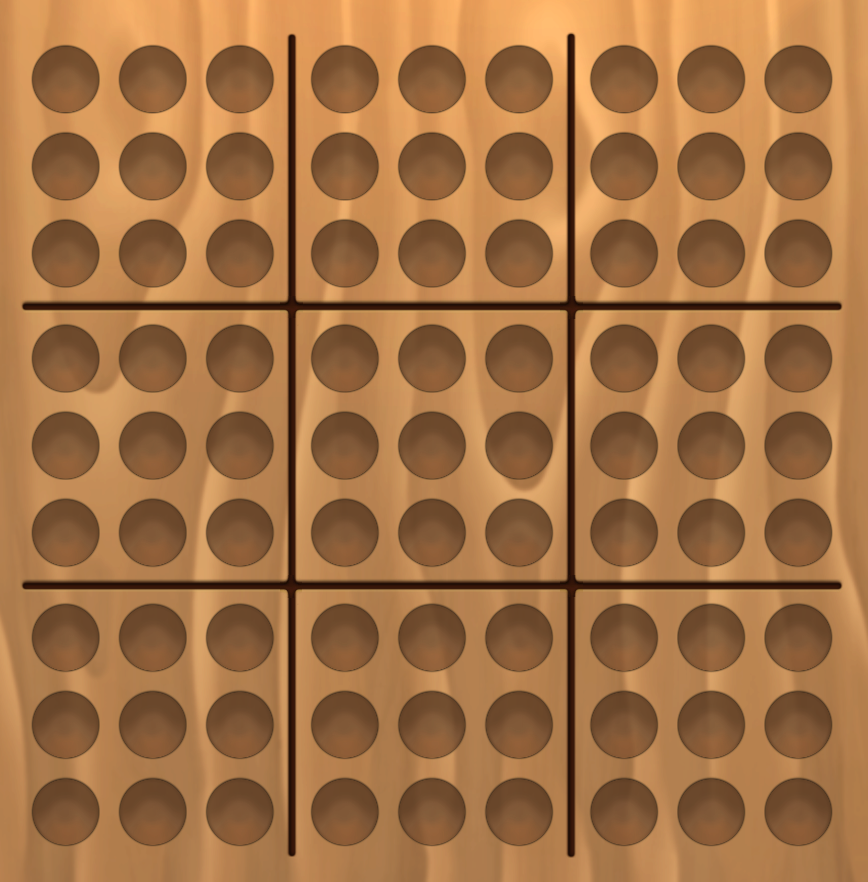
Every hole in the glowing column shows its candidates as small marbles. The large copy of the column under the board shows the same holes up close. Find the three holes whose notes use only three colors, then clear those colors from the rest of the column.
 This is the real board from Marble Sudoku. The nine marble colors stand for the numbers 1 to 9.
- Trio
- Clear
- Place
STEP 1
Find the trio, clear the column
Read the example in words
Column 4 has seven empty holes. Their candidates are: row 1 Red, Teal or Yellow; row 2 Teal or Yellow; row 3 Red or Yellow; row 5 Green or Yellow; row 6 Red, Pink or Yellow; row 7 Teal or Sky; and row 8 Pink, Teal or Navy. Rows 1, 2 and 3 form a naked triple: between them they use only Red, Teal and Yellow, so those three colors must fill those three holes — and all three sit in the top-middle box as well. Removing Red, Teal and Yellow from the other holes leaves row 5 with Green, row 6 with Pink and row 7 with Sky, three naked singles, while row 8 keeps Pink and Navy. Placing Green in row 5 is the easy follow-up.
YOUR TURN · PRACTICE
Spot the naked triples
Every empty hole shows its candidates as small marbles. Tap the three holes that form a naked triple and watch their colors vanish from the rest of the group. On Easy the group glows. On Hard you search the whole board.
Why a naked triple works
Say three cells in a column can only be 2, 3 or 4 between them: one shows {2, 3, 4}, one shows {2, 3} and one shows {3, 4}. That is three numbers for three cells. Whichever number lands where, the three cells swallow all three numbers whole — the pigeonhole principle, the pair logic one size up. No other cell in the column can hold a 2, a 3 or a 4, so you can delete them from all the other notes.
The three cells do not need to show the same numbers. Only the union matters: as long as three cells in one group use exactly three numbers between them, those numbers belong to those cells.
How to spot naked triples faster
- Scan cells with two or three notes. Only cells with at most three candidates can join a triple. Skip the crowded cells while you scan.
- Check boxes before lines. Triples hide inside boxes more often than they line up in a row or column. Boxes are smaller, so start there.
- Look for the 2-2-2 shape. Three cells with two candidates each are the easiest triple to see. Any mix of two- and three-note cells works.
- Follow up immediately. After clearing, look for new singles in the changed cells. That is where the payoff is.
Naked triple vs. other candidate patterns
| Naked pair | Naked triple | Hidden pair | |
|---|---|---|---|
| What you look for | Two cells with the same two candidates | Three cells that share three candidates between them | Two numbers that fit only two cells in a group |
| What it removes | Those two numbers from the rest of the group | Those three numbers from the rest of the group | All other candidates from those two cells |
| Level | Intermediate | Intermediate | Intermediate |
Common mistakes
- Requiring all three numbers in every cell. Wrong: only the union matters. A cell showing just {2, 3} still belongs if the three cells together use exactly three numbers.
- Counting four cells as a triple. Four cells with four numbers between them form a naked quad — the same logic, but a different pattern.
- Clearing outside the shared group. Only remove the trio numbers from cells in the row, column or box the three cells share.
- Skipping the follow-up singles. The triple pays off when a cleared cell drops to one candidate. Check every cell you changed.
Naked triples FAQ
What is a naked triple in Sudoku?
A naked triple is three cells in the same row, column or 3 × 3 box whose candidates together use only three numbers. Those three numbers must go in those three cells, so they can be removed from every other cell in that group.
Do all three cells need the same three numbers?
No. One cell might show 2 and 3, another 3 and 4, and the third 2, 3 and 4. Only the union matters: as long as three cells together use exactly three numbers, those numbers fill the three cells.
What is a hidden triple?
A hidden triple is three numbers that can only go in the same three cells of a group, even if those cells show other candidates too. A naked triple looks at what the cells contain; a hidden triple looks at where the numbers fit.
What about four cells?
Four cells in one group whose notes together use only four numbers form a naked quad. The same logic applies one size up, but quads show up much less often than triples.
Does this work in Marble Sudoku?
Yes. In Marble Sudoku the candidates are marble colors. Three holes that together use only three colors form a naked triple.
When do triples start to matter?
Triples start to matter in medium and hard puzzles, once most singles are used up. They often hide inside boxes, so check boxes before rows and columns.

PRACTICE IN THE GAME
Use naked triples in a real puzzle
Tougher puzzles are where triples pay off. Note the possible colors, spot three holes sharing three colors and clear the rest of the group.
Next techniqueX-Wing